01
Picosecond pulse
The pulse is a thousand times shorter than a nanosecond pulse: pigment is broken up mechanically rather than burned away by heat.

PicoWay is a picosecond laser with three wavelengths. The ultra-short pulse destroys pigment photoacoustically with almost no heating of surrounding tissue, making pigment work safer on darker skin.
Book this treatment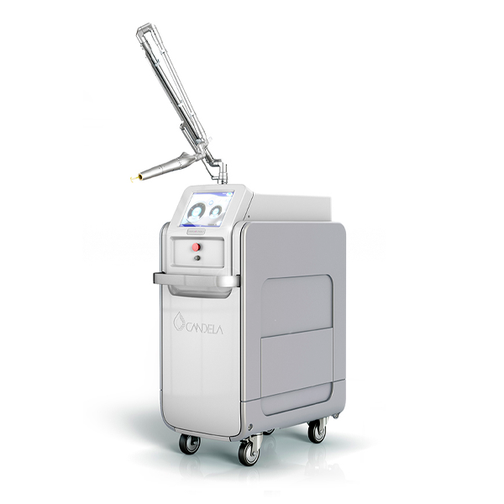
The pulse is a thousand times shorter than a nanosecond pulse: pigment is broken up mechanically rather than burned away by heat.
532 nm treats bright pigments, 785 nm handles blue and green, and 1064 nm addresses deep pigment and darker phototypes.
A fractional mode for rejuvenation, melasma and post-acne scarring — without damaging the skin surface.
Minimal heating reduces the risk of post-treatment hyper- and hypopigmentation.
Photoacoustic pigment breakdown without significant heating.
Depends on the colour, depth and age of the pigment.
532 / 785 / 1064 nm — matched to pigment colour and skin phototype.
The price depends on the tattoo size and pigment colour. The doctor gives an exact quote after examining the area.
Pigment spots take 1–3 sessions. A tattoo takes 4–8 sessions on average, 6–8 weeks apart.
Redness and pinpoint crusts may appear and clear within 3–7 days. Your normal routine is not affected.
The sensation is brief and tolerable. A topical anaesthetic is used for tattoo removal.
Not with correctly chosen settings. Some pigments (white, skin-tone) clear less well — this is discussed in advance.
Pregnancy, a fresh tan, photosensitising medication, a tendency to keloids and active inflammation in the area.
Before the treatment — a diagnostic consultation. The doctor defines the areas, plans the course and combines it with other protocols.